Italian locust (Calliptamus italicus)
| Calliptamus italicus | |
|---|---|
.jpg) | |
| Other common names | |
| Common pincer grasshopper | |
| Taxonomic classification | |
| Suborder: | Caelifera |
| Family: | Acrididae |
| Subfamily: | Calliptaminae |
| Genus: | Calliptamus |
| Scientific name | |
| Calliptamus italicus (Linnaeus, 1758) | |
| Geography | |
| Native countries: | |
| Pest status | |
| Known pest | |
| Sound | |
 Listen to this species on xeno-canto | |
The Italian locust (Calliptamus italicus) is widespread across western Europe and central Asia. It has been recognized as an agricultural pest since the Middle Ages, and outbreaks remain common today. By the late 20th century, it had become one of the most serious pest species in extratropical Eurasia.
Taxonomy
For full nomenclature and taxonomic details of this taxon, see Orthoptera Species File
Identification
Calliptamus italicus is a key species within the genus Calliptamus, part of the Calliptaminae subfamily, which includes 13 species and three subspecies. The subfamily Calliptaminae includes a diverse group of grasshoppers characterized by an elongated vertex with prominent lateral ridges, a smooth frontal carina, and a slightly roof-shaped pronotum with distinct ridges and an angled rear margin. Wings and tegmina are well developed, and the hind legs are robust. Males often exhibit sharply pointed supra-anal plates and long, upward-curving cerci, while females have short, sturdy ovipositor valves with sharp, darkened tips. According to Jago (1963)[1], the genus within this subfamily includes 13 species and three subspecies, although C. subalpinus was later synonymized with C. siciliae by Harz (1975)[2]. The group is distributed across Central and Southern Europe, Mediterranean islands, North Africa, and much of Asia, excluding the northern and southeastern regions.[3]
Calliptaminae grasshoppers and locusts are pests of varying economic impact, damaging crops and rangelands and sometimes causing significant vegetation loss.[4]
Identification details
Calliptamus italicus adults come in shades of grey—from pale to dark—and occasionally brownish tones, all marked with numerous small dark spots, especially on the tegmina. Pale bands, creamy or nearly white, often run along the pronotal disk and tegmina, accompanied by light spots on the pronotal lobes. The hind wings almost always feature a pink basal section. The tegmina are well-developed with sparse venation. The hind wings are somewhat shorter than the forewings and relatively narrow. The hind femora are thick and short. Inside, the hind femora are red or pink with one to three brownish grey or black spots, while the hind tibiae are typically ruby-red or pink, though sometimes they may appear very pale. The male cerci widen noticeably toward the tip; the upper apical lobe is considerably longer than the lower apical lobe; the lower lobe has a sharply pointed tooth.[5][6]
Featured resource
Identification resources
| Title | Author(s) | Year | Geographic purview | URL |
|---|---|---|---|---|
| Practical guidelines on the three locust pests in Caucasus and Central Asia | FAO Locust Watch in Caucasus and Central Asia and Food and Agriculture Organization of the United Nations | 2019 |
Distribution
The Italian Locust is found throughout Western Europe and Central Asia.
For more information and distribution records see [GBIF]
Biology and ecology
The Italian locust is univoltine, with eggs that overwinter in diapause. Eggs are laid in dry, light soils, often on fallow land. Development includes five nymphal instars.[5] In C. italicus, embryonic development begins right after egg laying but is interrupted by a required diapause during the cold season, resuming in spring. The process includes three stages: pre-diapause development, diapause, and post-diapause development. Soil surface temperature is the primary factor determining the timing of nymphal hatching, with development only progressing above a threshold of ~11.5–12 °C. Early autumn moisture and overwintering at temperatures just above 0 °C promote synchronized and successful hatching, while development without cooling leads to high embryo mortality. Late spring moisture delays hatching and reduces larval numbers.[6]
Eggs measure 4–6 mm, with 17–60 per pod (usually 30–35) and 4–6 pods laid per female. Pods are often clustered, reaching densities of 400–800 per square meter, sometimes up to 10,000. Hatching occurs from April to July depending on region—earlier in southern lowlands and later in northern and mountainous areas—and lasts several weeks, causing mixed-age populations of nymphs and adults.[5]
C. italicus undergo phase changes affecting body size (adults), coloration (nymphs), and behavior, varying by region. Both gregarious and solitarious adults share similar coloration patterns, but gregarious individuals have longer wings.[6]
During outbreaks, dense hopper bands—up to thousands per square meter and 10 km long—can migrate over 400 meters daily before dispersing as adults. Adult swarms may also be dense, flying locally before dispersing, sometimes covering dozens of kilometers. In recession periods, populations are mainly high in semi-deserts and low in other parts of its range.[5]
Development typically takes 30–45 days for the gregarious form and 55–77 days for the solitarious form. Adults emerge from May to August, with eggs laid between June and October. Mortality rates, especially for eggs and young hoppers, are closely linked to spring and early summer weather—high during wet, cool conditions and low during dry, warm seasons when most eggs successfully develop.[5]
Habitat and ecology
The Italian locust inhabits a broad range of dry environments—including dry Mediterranean landscapes, semi-deserts, northern deserts, and steppes—extending from southern Europe and Central Europe (Germany, Poland) across the western Mediterranean to the Altai Mountains, southern West Siberia in Russia, East Kazakhstan, and northwest China (Xinjiang). Its range also stretches southward to encompass regions such as Turkey, Turkmenistan, Cyprus, Israel, Iran, and Afghanistan.[7][8][9][5]
Significant differences exist in both short- and long-term dynamics among local populations and across regional population systems of Calliptamus italicus.[7]
The Italian locust primarily feeds on dicotyledons like Artemisia, Achillea, Kochia, Convolvulus, Potentilla, and Lactuca, while generally avoiding grasses and sedges—though some grasses (Festuca pseudovina, Phleum phleoides) are occasionally consumed.[5]
It damages various crops including sunflower, legumes (especially alfalfa), cotton, potato, and sometimes cereals such as wheat, maize, and oats. It also affects steppe and semi-desert rangelands, feeding on leaves, young stems, grains, bark, and fruits of plants like citrus, grapes, mulberry, tobacco, walnut, watermelon, and fodder cabbages.[5]
Land-use change
The easternmost range of the Italian locust experienced frequent and severe upsurges throughout the 20th century and now warrants increased focus due to ongoing global and local ecosystem changes.[7]
Pest status
The Italian locust has been reported as a pest since medieval times and outbreaks remain common to date. The easternmost range—from southern West Siberia to the Dzhungarian Basin in Northwestern China (Xinjiang) and the Pamiro-Alay Mountains across Kyrgyzstan, Tajikistan, and Uzbekistan—is a major hotspot for its outbreaks.[7] In the Siberian steppes this locust can reach densities over 2000 individuals m−2.[10][11]
C. italicus can cause extensive agricultural damage, often stripping plots of nearly all above-ground vegetation. It typically feeds first on preferred dicotyledonous plants before turning to cereals as alternatives become scarce. Swarms and hopper bands commonly affect pastures and fallow lands, where they may compete with livestock for forage. From these areas, they frequently move into croplands. In Central Asian oases, infestations can lead to severe losses in irrigated cotton and wheat fields.[5]
No reliable models currently exist for predicting Calliptamus italicus population dynamics. While outbreaks may correlate with low solar activity in some regions, this pattern is inconsistent. Increases in abundance typically follow several consecutive years of dry, warm weather in late spring and early summer. Due to its spatially structured populations and variable local dynamics, forecasting is challenging. Effective management requires multi-scale studies of population trends, with attention to climate, ecosystem changes, and local ecological conditions.[5]
Outbreaks
Throughout the 20th century, the most significant outbreaks were largely concentrated in three decades: 1921–1930, 1931–1940, and most notably 1991–2000.[7] The 1999 outbreak of the Italian locusts in Kazakhstan caused an estimated crop loss valued at US$15 million.[12] within[9]
In 2000, over 16.6 million hectares in Kazakhstan and Russia were affected. Control efforts covered more than 10 million hectares and involved a range of insecticides, including organophosphates and insect growth regulators (IGRs). That year, Kazakhstan invested over USD 23 million in managing the infestations.[12] within[7]
Media coverage
| Title | Author(s) | Year | Geographic purview | URL |
|---|---|---|---|---|
| Kazakhstan Tries To Ward Off Locust Invasion | 2024 | |||
| Italian island of Sardinia infested with locusts | 2022 |
Organizations associated with the Italian locust
| Organization name | Acronym | Website | Type | Focus | Focus keywords | Geographic purview |
|---|---|---|---|---|---|---|
| FAO Locust Watch in Caucasus and Central Asia | CCA | View | Intergovernmental Organization | Education, Information Hub, Governance | Training, Regional cooperation, Monitoring, Control, Policy, Forecasting | Afghanistan, Armenia, Azerbaijan, Georgia (country), Kazakhstan, Tajikistan, Turkmenistan, Uzbekistan, Russia, Kyrgyzstan |
Resources
| Title | Author(s) | Year | Geographic purview | URL |
|---|---|---|---|---|
| FAO’s technical series on locust management in the Caucasus and Central Asia | Food and Agriculture Organization of the United Nations and FAO Locust Watch in Caucasus and Central Asia,Alexandre Latchininsky | 2026 | ||
| AgroAtlas Pests | ||||
| IUCN European Red List of Grasshoppers, Crickets and Bush-crickets | 2016 | View URL | ||
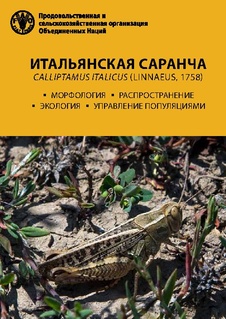
| Italian Locust Calliptamus italicus (Linnaeus, 1758) Morphology, Ecology, Distribution, Population Management | Food and Agriculture Organization of the United Nations,Michael Sergeev, Alexandre Latchininsky,M.K. Childebaev, I.A. Vankova, F.A. Gapparov, V.E. Kambulin, E.O. Kokanova, L.B. Pshenitsyna, I.I. Temreshev, M.E. Chernyakhovsky, N.N. Sobolev and V.V. Molodtsov | 2022 | View URL | |
| FAO Locust Watch Locusts in Caucasus and Central Asia (CCA) meeting, research, workshop, survey report collection | FAO Locust Watch in Caucasus and Central Asia and Food and Agriculture Organization of the United Nations | 2022 | ||
| Improving national and regional locust management in Caucasus and Central Asia | Food and Agriculture Organization of the United Nations | 2015 | View URL | |
| Practical guidelines on the three locust pests in Caucasus and Central Asia | FAO Locust Watch in Caucasus and Central Asia and Food and Agriculture Organization of the United Nations | 2019 | ||
| 2014 evaluation of field trials data on the efficacy and selectivity of insecticides on locusts and grasshoppers | Commission for Controlling the Desert Locust in the Central Region and Food and Agriculture Organization of the United Nations | 2014 | View URL | |
| CABI Green Muscle education videos | Centre for Agriculture and Bioscience International | 2021 | ||
| FAO Locust Watch bulletin for locusts in Caucasus and Central Asia | FAO Locust Watch in Caucasus and Central Asia and Food and Agriculture Organization of the United Nations | View URL |
Specimen contributors for this species
 Bionomia links specimen records in GBIF to the people who collected and identified them. Each list shows the top 20 for this species.
Collected by
People who collected specimens of this species in the field.
- Sebastian Ćato — 48 specimens collected
- Juraj Ahel — 25 specimens collected
- Patrick Hacker — 21 specimens collected
- Gilles San Martin — 20 specimens collected
- Josip Skejo — 15 specimens collected
- Tommy Andriollo — 13 specimens collected
- Paul Jean-Charles Braun — 8 specimens collected
- Martin Scheuch — 8 specimens collected
- Victor Parkhomenko — 8 specimens collected
- Михаил Кривошеев — 7 specimens collected
- Marco Schmidt — 6 specimens collected
- Konstantin Romanov — 6 specimens collected
- Roland Achtziger — 6 specimens collected
- Jakob Fahr — 6 specimens collected
- Denis Ivanov — 6 specimens collected
- Steffen Kittlaus — 5 specimens collected
- Claude Kolwelter — 5 specimens collected
- Karl A. Berger — 5 specimens collected
- Valentin Moser — 5 specimens collected
- Марина Горбунова — 5 specimens collected
Identified by
People who determined the taxonomic identity of specimens of this species.
- Josip Skejo — 190 specimens identified
- Sebastian Ćato — 140 specimens identified
- Gilles San Martin — 21 specimens identified
- Slobodan Ivkovic — 11 specimens identified
- Victor Parkhomenko — 7 specimens identified
- Patrick Hacker — 7 specimens identified
- Konstantin Romanov — 6 specimens identified
- Roland Achtziger — 6 specimens identified
- Martin Scheuch — 6 specimens identified
- Denis Ivanov — 6 specimens identified
- Marco Schmidt — 5 specimens identified
- Raoul Gerend — 5 specimens identified
- Valentin Moser — 5 specimens identified
- Claude Kolwelter — 4 specimens identified
- Paul Jean-Charles Braun — 4 specimens identified
- Tommy Andriollo — 4 specimens identified
- David Marcelo Torres Arizaga — 4 specimens identified
- Vlasta Loya — 3 specimens identified
- Azat Kadirov — 3 specimens identified
- David Tan — 3 specimens identified
References
- ↑ Jago ND (1963) A revision of the genus Calliptamus (Orthoptera, Acrididae). Bulletin of the British Museum (Entomology) 13(9): 292–347.
- ↑ Harz K (1975) The Orthoptera of Europe II. Die Orthopteren Europas II. Vol. 11 of series Entomologica. 939 pp., 3,519 figs., The Hague.
- ↑ Llorente del Moral V (1982) La subfamilia Calliptaminae en España (Orthoptera, Catantopidae). Revista Española de Entomología 58(1-4): 171–192. http://hdl.handle.net/10261/169152
- ↑ Soomro S, Wagan MS (2005) Notes on subfamily Calliptaminae (Acrididae: Acridoidea: Orthoptera) of Pakistan, with the description of one new species. Pakistan Journal of Zoology 37(3): 229–236. https://www.zsp.com.pk/pdf37/PJZ-28905%20_12_.pdf
- ↑ 5.00 5.01 5.02 5.03 5.04 5.05 5.06 5.07 5.08 5.09 Sergeev MG (2019) Italian locust Calliptamus italicus (Linnaeus, 1758) (Acrididae). In: Lecoq M, Zhang L (Eds) Encyclopedia of pest Orthoptera of the world. China Agricultural University Press, Beijing, China, pp. 41–46.
- ↑ 6.0 6.1 6.2 Sergeev MG, Childebaev MK, Van'kova IA, Gapparov FA, Kambulin VE, Kokanova EO, Latchininsky AV, Pshenitsyna LB, Temreshev II, Chernyakhovsky ME, Sobolev NN, Molodtsov VV (2022) Итальянская саранча Calliptamus italicus (Linnaeus, 1758): морфология, распространение, экология, управление популяциями [The Italian locust Calliptamus italicus (Linnaeus, 1758): Morphology, distribution, ecology, population management]. Edited by MG Sergeev and MK Childebaev. Rome, Italy. https://doi.org/10.4060/cb7921ru
- ↑ 7.0 7.1 7.2 7.3 7.4 7.5 Sergeev MG, Childebaev MK, Ji R, Molodtsov VV, Baturina NS, Van'kova IA, Kim-Kashmenskaya MN, Popova KV, Zharkov VD, Yefremova OV (2025) Ecologo-geographic distribution patterns of the Italian locust Calliptamus italicus (Linnaeus) (Orthoptera: Acrididae) in the easternmost part of its range. Insects 16(2): 21. https://doi.org/10.3390/insects16020021
- ↑ Sergeev MG (2021) Ups and downs of the Italian locust (Calliptamus italicus L.) populations in the Siberian steppes: On the horns of dilemmas. Agronomy 11(4): 746. https://doi.org/10.3390/agronomy11040746
- ↑ 9.0 9.1 Zhang L, Lecoq M, Latchininsky A, Hunter D (2019) Locust and grasshopper management. Annual Review of Entomology 64: 15–34. https://doi.org/10.1146/annurev-ento-011118-112500
- ↑ Stolyarov MV (2000). Strategy and tactics of gregarious locust control. Zashchita Karantin Rastenii 10, 17–19.
- ↑ Le Gall M, Overson R, Cease A (2019) A global review on locusts (Orthoptera: Acrididae) and their interactions with livestock grazing practices. Frontiers in Ecology and Evolution 7: 263. https://doi.org/10.3389/fevo.2019.00263
- ↑ 12.0 12.1 Latchininsky AV, Sergeev MG, Childebaev MK, Chernijakhovskij ME, Lockwood JA, Kambulin VE, Gapparov FA (2002) The grasshoppers of Kazakhstan, Middle Asia and adjacent territories. Association for Applied Acridology International & University of Wyoming, Laramie, Wyoming, USA. (In Russian)