Resource navigation
Resources on HopperWiki are a board term that encompasses documents, websites, and videos that relate to locust or grasshopper research or management. They are primarily organized by the following categories:
Instructional guides are structured resources that help people learn, follow, or perform a task.
They include control manuals, guidelines, biology profiles, courses, field guides, and FAQs depending on whether they explain procedures, answer questions, provide rules, teach concepts, or support identification in the field.
Click here for more information specifically on identifying locusts and grasshoppers.
Technical reports are formal written documents that present detailed technical information, findings, or recommendations from scientific, operational, or regulatory work. They are usually more structured and specialized than a general article or newsletter, and they are used to support decision-making, guide implementation, or share data and analysis within a professional or technical community.
Common examples of technical reports include agriculture bulletins, operational field reports, technology deployment summaries, situation bulletins, regulatory documents, trial summary reports, and meeting reports.
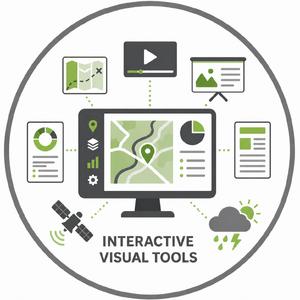
Interactive visual tools are digital materials that present information in a visual form and let users engage with it directly, such as through collecting data, clicking, zooming, filtering, or navigating content. They can include geospatial dashboards, maps, presentations, promotional material, infographics, decision support systems, remote sensing tools, and videos.
View the full list of interactive visual tools on HopperWiki here.

A reference work is a resource designed to be consulted for specific, authoritative information rather than read cover to cover. They are typically organized for quick access to facts, data, descriptions, identifiers, or curated knowledge on a specific subject, such as compendiums, data repositories, identification resources, monographs, portals, reference indexes, and informational websites.

Media articles on HopperWiki are an incomplete snapshot of some press releases and media coverage of locust and grasshopper outbreaks. Media is a broad term for channels of communication that reach people widely, such as news articles and podcasts. In this sense, it includes both written and audio forms used to inform, report, or entertain.
We have aggregated some high quality articles here for educational purposes.

Art is an underdeveloped category on HopperWiki, but it has strong potential to encompass a wide range of creative expressions related to human-insect or art expressing scientific themes. The category could include visual arts such as paintings, illustrations, and sculptures; performance arts like theatre, dance, and storytelling; as well as musical works, soundscapes, or artistic data visualizations inspired by Orthoptera. Art could also link to community-based projects, exhibitions, educational performances, and artistic outreach that help communicate scientific or ethical ideas to broader audiences in engaging, non-technical ways.