Somalia
| Somalia | |
|---|---|
 | |
| Somalia is within: | |
| Region: | Africa |
| Subregion: | Sub-Saharan Africa |
| Intermediate region: | Eastern Africa |

Somalia is a country located in the Horn of Africa, bordered by Ethiopia, Djibouti, and Kenya. It has the longest coastline in Africa, bordered by the Gulf of Aden to the north and the Indian Ocean to the east. The country can be categorized into five distinct geographic zones based on its topography. These include the northern coastal plains, the Golis mountain range in the north, the central coastal plains, a wide limestone-sandstone plateau that spans central and southern Somalia, and the floodplains of the Juba and Shabelle rivers in the south, which offer the greatest agricultural potential. [1] The country has faced significant challenges in recent decades, including civil conflict, political instability, and humanitarian crises.
Ecology
Somalia’s climate is arid to semi-arid with hot conditions year-round, with minimal seasonal variation. Temperatures typically range from 30 to 40 °C (86 to 104 °F), though they can exceed 45 °C (113 °F) in northern regions and drop below freezing at higher elevations. Some of the highest mean annual temperatures in the world have been recorded in Somalia.
The key agricultural regions are located in the south, where the farming system can be categorized into three types: subsistence rain-fed farming, often integrated into agro-pastoral systems with typical farm sizes ranging from 2 to 4 hectares; small-scale irrigation and oasis farming; and commercial farming, which is primarily large-scale and relies on irrigation. [1]
Somalia is impacted by the desert locust (Schistocerca gregaria). During recessions, the frequency of recorded breeding in Somalia is generally low. However, breeding can happen at any time of the year, and in certain years, consecutive periods of favorable rainfall during winter, spring, and into summer have led to significant population growth and the transformation of solitary locusts into gregarious swarms. [2]
The main areas where adult locusts and hoppers are most commonly found during recessions are the coastal and sub-coastal plains of western Somalia. The primary recession habitats are linked to fine sandy and silty soils, which accumulate along waterway beds and deltas, and are later shaped into hummocks, drifts, and dunes by wind erosion and deposition. [2] After rain and flooding, there is typically robust growth of annual vegetation, including common food and shelter plants for the desert locust, such as Heliotropium ramosissimum, Aerva javanica, Gisekia pharnaceoides, Boerhavia sp., Cleome spp., as well as grasses like Aristida, Latipes, Tragus, and Dactyloctenium. [2]
Outbreaks
Somalia's location in the Horn of Africa makes it a key area for desert locust outbreaks when conditions such as heavy rains and cyclones create favorable breeding grounds.
2019-2021
The country was significantly impacted by the recent desert locust outbreak. This outbreak was one of the worst in decades, affecting large swathes of East Africa. The outbreak began in 2019, driven by unusual climatic conditions that favored locust breeding. The situation escalated in 2020-2021, with heavy rains and cyclones creating ideal conditions for the formation of massive locust swarms. These swarms caused extensive damage to crops and pastures, threatening food security and livelihoods. In response, the Food and Agriculture Organization (FAO) of the United Nations, along with regional governments, implemented extensive control measures such as aerial and ground pesticide spraying, monitoring, and early warning systems to combat the infestation and mitigate its impacts. Read more here
During the 2019-2021 desert locust outbreak, Somalia was the sole country to rely exclusively on the biopesticide Metarhizium acridum and the insect growth regulator teflubenzuron, avoiding the use of potentially harmful chemicals to safeguard its pastoral system. FAO initially ordered four tons of Metarhizium biopesticide, enough to treat about 80,000 hectares at 50 g/ha. From 2019 to 2021 a total of 11 tons was used in Somalia. [3]Despite challenges in field evaluations of this campaign, valuable insights were gained. [4] This effort is considered a significant breakthrough, marking the largest area ever treated with biopesticides in a single campaign globally. [3]
-
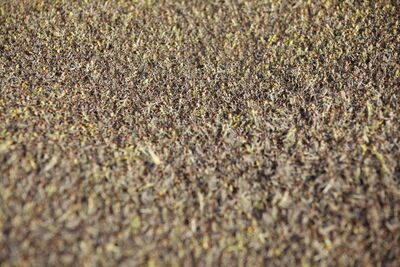
Desert locusts covering the ground in Ceel-Gaal village, in Salal region, Somaliland. ©FAO/Isak Amin -
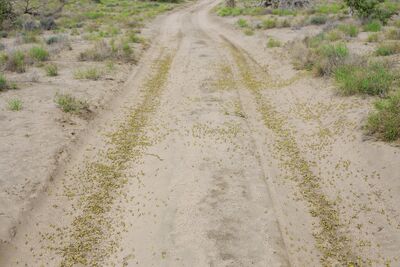
A swarm of desert locusts crossing the road in Chidhi village, Salal region, Somaliland. ©FAO/Isak Amin -
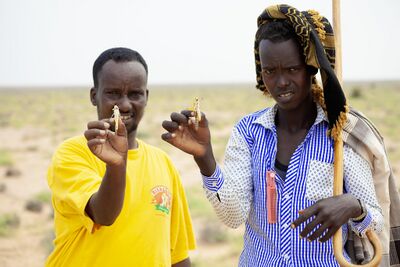
Farmers holding adult desert locusts in Somalia ©FAO/Isak Amin -
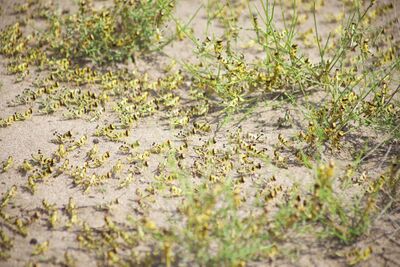
Desert locust nymphs in Somalia ©FAO/Isak Amin


View the full FAO Flickr photo album of the 2019 desert locust outbreak in Somalia
Management and research
Somalia is part of the FAO Desert Locust Control Organization for Eastern Africa (DLCO EA) and since 1995 it has also had the opportunity to join the FAO Commission for Controlling the Desert Locust in the Central Region (CRC) but has yet to do so officially. [5]
The Somali Ministry of Agriculture works closely with the FAO to implement locust control activities on the ground. This includes coordinating with local authorities and communities to carry out surveillance, early warning, and control operations.
Following the 2019-2021 desert locust outbreak, Somalia opened the National Desert Locust Monitoring and Control Centre in Qardho, Bari Region, on November 3, 2021. This center acts as the primary early warning and control hub for locusts in Puntland and across the nation. The FAO established the center with financial support from the UK Foreign, Commonwealth and Development Office (FCDO) and USAID to enhance locust response efforts and reduce their impact on food security and livelihoods in the region. [6]
Species gallery
- Highlighted species for Somalia
-

-

Organizations
Locusts and grasshoppers are typically managed through a national plant protection system led by a country’s plant protection organization, ministry of agriculture, or equivalent biosecurity authority. They are often supported by specialized pest control branches, natural resource agencies, and regional bodies when outbreaks cross borders. These agencies are usually the first point of contact for surveillance, reporting, permits, quarantine decisions, and control operations. If the country belongs to one of the FAO locust commissions, those bodies provide a regional framework for early warning, field surveillance, information sharing, and coordinated response, helping countries align monitoring, contingency planning, and control actions across borders.
Resources
| Name | Species purview | Year published | Resource link | Descriptive keyword | Language | Geographic purview | Author |
|---|---|---|---|---|---|---|---|
| 2014 evaluation of field trials data on the efficacy and selectivity of insecticides on locusts and grasshoppers | 2014 | View | Pesticides, Management, Pesticide management, Chemical control, Information hub | English | Bahrain, Djibouti, Egypt, Eritrea, Ethiopia, Jordan, Kuwait, Iraq, Lebanon, Oman, Qatar, Saudi Arabia, Sudan, Syria, United Arab Emirates, Yemen, Somalia | Commission for Controlling the Desert Locust in the Central Region, Food and Agriculture Organization of the United Nations | |
| Atlas of desert locust breeding habitats | 1997 | Breeding zones, Habitat, Map, Distribution, Biology, Ecology, Behavior, Phase polyphenism | English | Ethiopia, Senegal, Sudan, Djibouti, Somalia, Algeria, Mauritania, Mali, Egypt, Eritrea, Saudi Arabia, Yemen, Oman, United Arab Emirates | Food and Agriculture Organization of the United Nations, George Basil Popov, G.B. Popov | ||
| Commission for Controlling the Desert Locust in the Central Region (CRC) ad hoc, emergency, other meetings | 1971 | Management, Survey, Biology, Monitoring, Toxicology, Physiology, Ecology, Forecasting, Locust commission meeting, Collection | English | Bahrain, Djibouti, Egypt, Eritrea, Ethiopia, Jordan, Kuwait, Iraq, Lebanon, Oman, Qatar, Saudi Arabia, Sudan, Syria, United Arab Emirates, Yemen, Somalia | Commission for Controlling the Desert Locust in the Central Region, Food and Agriculture Organization of the United Nations | ||
| Commission for Controlling the Desert Locust in the Central Region (CRC) committee meetings | 1971 | Management, Survey, Biology, Monitoring, Toxicology, Physiology, Ecology, Forecasting, Locust commission meeting, Bundle | English | Bahrain, Djibouti, Egypt, Eritrea, Ethiopia, Jordan, Kuwait, Iraq, Lebanon, Oman, Qatar, Saudi Arabia, Sudan, Syria, United Arab Emirates, Yemen, Somalia | Commission for Controlling the Desert Locust in the Central Region, Food and Agriculture Organization of the United Nations | ||
| Commission for Controlling the Desert Locust in the Central Region (CRC) survey reports | 1971 | Management, Survey, Biology, Monitoring, Toxicology, Physiology, Ecology, Forecasting, Locust commission meeting, Bundle | English | Bahrain, Djibouti, Egypt, Eritrea, Ethiopia, Jordan, Kuwait, Iraq, Lebanon, Oman, Qatar, Saudi Arabia, Sudan, Syria, United Arab Emirates, Yemen, Somalia | Commission for Controlling the Desert Locust in the Central Region, Food and Agriculture Organization of the United Nations | ||
| Commission for Controlling the Desert Locust in the Central Region (CRC) training and workshops | 1971 | Management, Survey, Biology, Monitoring, Toxicology, Physiology, Ecology, Forecasting, Locust commission meeting, Collection | English | Bahrain, Djibouti, Egypt, Eritrea, Ethiopia, Jordan, Kuwait, Iraq, Lebanon, Oman, Qatar, Saudi Arabia, Sudan, Syria, United Arab Emirates, Yemen, Somalia | Commission for Controlling the Desert Locust in the Central Region, Food and Agriculture Organization of the United Nations | ||
| Desert locust control in Somalia between 2019 and 2021 | 2022 | Biopesticide | English | Somalia | |||
| Desert locust field handbook | 2020 | View | Species identification, Management | English | Israel, Democratic Republic of the Congo, Morocco, Algeria, Niger, Mauritania, Chad, Mali, Lebanon, Sudan, Afghanistan, Kuwait, Jordan, United Arab Emirates, Somalia, South Sudan, Pakistan, Ethiopia, Libya, Kenya, India, Oman, Bahrain, Djibouti, Yemen, Uganda, Egypt, Eritrea, Saudi Arabia, Iraq, Palestine, Tanzania, Syria, Iran, Turkey | Centre for Agriculture and Bioscience International | |
| Desert locust invasion responding to a crisis within a crisis | 2020 | View | Presentation, Outbreaks, Emergency response | English | Yemen, Eritrea, Sudan, South Sudan, Djibouti, Somalia, Ethiopia, Kenya, Uganda | ||
| Desert locust master training manual | 2003 | View | Management, Training manual | English | Bahrain, Djibouti, Egypt, Eritrea, Ethiopia, Jordan, Kuwait, Iraq, Lebanon, Oman, Qatar, Saudi Arabia, Sudan, Syria, United Arab Emirates, Yemen, Somalia | Food and Agriculture Organization of the United Nations | |
| Desert locust surveillance and control programmatic environmental assessment | 2020 | View | Monitoring, Environmental assessment, Management | English | Ethiopia, Kenya, Somalia | United States Agency for International Development | |
| Desert locust upsurge progress report on the response in the Greater Horn of Africa and Yemen | 2020 | View | Locust outbreaks, Management, Report, Progress report | English | Bahrain, Djibouti, Egypt, Eritrea, Ethiopia, Jordan, Kuwait, Iraq, Lebanon, Oman, Qatar, Saudi Arabia, Sudan, Syria, United Arab Emirates, Yemen, Somalia | Commission for Controlling the Desert Locust in the Central Region, Food and Agriculture Organization of the United Nations | |
| East Africa desert locust crisis fact sheets | 2019, 2020, 2021 | Emergency response, Outbreaks, Series | English | Sudan, South Sudan, Ethiopia, Yemen, Somalia, Kenya, Uganda, Democratic Republic of the Congo | United States Agency for International Development | ||
| East Africa regional desert locust impact monitoring reports | 2021 | Locust outbreaks, Food security, Report, Set | English | Ethiopia, Kenya, Somalia, Uganda | The Food Security and Nutrition Working Group | ||
| Estimate the potential impact of DL resources control an outbreak campaign excel file worksheets | Chemical control, Report, Excel files, Series | English | Bahrain, Djibouti, Egypt, Eritrea, Ethiopia, Jordan, Kuwait, Iraq, Lebanon, Oman, Qatar, Saudi Arabia, Sudan, Syria, United Arab Emirates, Yemen, Somalia | Commission for Controlling the Desert Locust in the Central Region, Food and Agriculture Organization of the United Nations | |||
| FAO commission for controlling the desert locust in the central region fifty years fighting desert locust | 2016 | View | International development, Community development, Environmental assessment, Decision making | English | Bahrain, Djibouti, Egypt, Eritrea, Ethiopia, Jordan, Kuwait, Iraq, Lebanon, Oman, Qatar, Saudi Arabia, Sudan, Syria, United Arab Emirates, Yemen, Somalia | Commission for Controlling the Desert Locust in the Central Region, Food and Agriculture Organization of the United Nations | |
| Field efficacy trials with the entomopathogen Metarhizium anisopliae var. acridum (Green Muscle) against the desert locust (Schistocerca gregaria) and monitoring of it's operational use | 2007 | View | Advice, Metarhizium acridum | English | Bahrain, Djibouti, Egypt, Eritrea, Ethiopia, Jordan, Kuwait, Iraq, Lebanon, Oman, Qatar, Saudi Arabia, Sudan, Syria, United Arab Emirates, Yemen, Somalia | Commission for Controlling the Desert Locust in the Central Region, Food and Agriculture Organization of the United Nations | |
| Global response plan January–December 2020 | 2020 | View | Emergency response, Outbreaks, Appeal | English | Iran, Yemen, Pakistan, Iraq, India, Ethiopia, Somalia, Kenya, South Sudan, Democratic Republic of the Congo, Tanzania, Uganda | Food and Agriculture Organization of the United Nations | |
| Greater Horn of Africa and Yemen Desert locust crisis appeal | 2020 | View | Appeal, Emergency appeal | English | Djibouti, Ethiopia, Somalia, Sudan, South Sudan, Tanzania, Yemen, Kenya, Uganda, Eritrea | Food and Agriculture Organization of the United Nations | |
| Guide for identifying desert locust | View | Locusts, Biology, General locust education | English | Bahrain, Djibouti, Egypt, Eritrea, Ethiopia, Jordan, Kuwait, Iraq, Lebanon, Oman, Qatar, Saudi Arabia, Sudan, Syria, United Arab Emirates, Yemen, Somalia | Commission for Controlling the Desert Locust in the Central Region, Food and Agriculture Organization of the United Nations | ||
| Guidelines for developing research proposals | View | Locusts, Research, Research proposal, Guide | English | Bahrain, Djibouti, Egypt, Eritrea, Ethiopia, Jordan, Kuwait, Iraq, Lebanon, Oman, Qatar, Saudi Arabia, Sudan, Syria, United Arab Emirates, Yemen, Somalia | Commission for Controlling the Desert Locust in the Central Region, Food and Agriculture Organization of the United Nations | ||
| Locusts have caused problems for quite some time | View | Locusts, Biology, Chemical control, Mechanical control, Spraying, Data analysis | English | Bahrain, Djibouti, Egypt, Eritrea, Ethiopia, Jordan, Kuwait, Iraq, Lebanon, Oman, Qatar, Saudi Arabia, Sudan, Syria, United Arab Emirates, Yemen, Somalia | Commission for Controlling the Desert Locust in the Central Region, Food and Agriculture Organization of the United Nations | ||
| Metarhizium anisopliae reference list of papers | View | Biological control, Infestations, Information hub | English | Bahrain, Djibouti, Egypt, Eritrea, Ethiopia, Jordan, Kuwait, Iraq, Lebanon, Oman, Qatar, Saudi Arabia, Sudan, Syria, United Arab Emirates, Yemen, Somalia | Commission for Controlling the Desert Locust in the Central Region, Food and Agriculture Organization of the United Nations | ||
| Operational-scale field trial with Green Muscle | 2005 | View | Agriculture, Chemical control, Metarhizium acridum, Trial, Biocontrol, Management | English | Bahrain, Djibouti, Egypt, Eritrea, Ethiopia, Jordan, Kuwait, Iraq, Lebanon, Oman, Qatar, Saudi Arabia, Sudan, Syria, United Arab Emirates, Yemen, Somalia | Commission for Controlling the Desert Locust in the Central Region, Food and Agriculture Organization of the United Nations | |
| Progress report on the response in the Greater Horn of Africa and Yemen | 2021 | Report, Advisory note, Forecasting, Monitoring, Locust outbreaks, Locusts, Outbreaks, Emergency response, Early warning, Livelihoods, Aerial control operations, Summary, Food security, Chemical control, Biological control, Community development, Collective movement, After action review, Agriculture, Crop health, Economics, Infographic, Advice, Public health, Pesticide management, Progress report, Set | English | Yemen, Somalia, Ethiopia, Kenya | United States Agency for International Development |
Highlighted media coverage
| Name | Author | Language | Species purview | Substance | Resource link | Year published |
|---|---|---|---|---|---|---|
| ‘Like an Umbrella Had Covered the Sky’: Locust Swarms Despoil Kenya | English | News article | 2020 | |||
| As Locusts Swarmed East Africa, This Tech Helped Squash Them | English | News article | 2021 | |||
| Commission for Controlling the Desert Locust in the Central Region (CRC) promotional materials | Commission for Controlling the Desert Locust in the Central Region, Food and Agriculture Organization of the United Nations | English | Promotional material | |||
| Crunch, Crunch: Africa's Locust Outbreak Is Far From Over | English | News article | ||||
| Ethiopia used chemicals to kill locusts | Malavika Vyawahare | English | News article | 2023 | ||
| FAO and government of Somalia open permanent desert locust monitoring centre | English | News article | 2021 | |||
| From crisis to innovation | Think Tank for Sustainability, Elena Lazutkaite, Emily Kimathi | English | News article | View | 2024 | |
| New Generation of Desert Locusts Breeding in Horn of Africa | English | News article | 2020 |
Projects
No results found in the database at this time—please reach out if you have any to share!
References
- ↑ 1.0 1.1 Food and Agriculture Organization of the United Nations (2014) Country Profile - Somalia. https://openknowledge.fao.org/server/api/core/bitstreams/6853abde-7988-49de-a739-bdeeeff5a7c7/content
- ↑ 2.0 2.1 2.2 Food and Agriculture Organization of the United Nations and Popoc GB (1997) Desert locust atlas. Rome. https://hopperwiki.org/images/e/ec/Atlas_of_desert_locust_breeding_habitats.pdf
- ↑ 3.0 3.1 Ries MW, Adriaansen C, Aldobai S, Berry K, Bal AB, Catenaccio MC, Cigliano MM, Cullen DA, Deveson T, Diongue A, Foquet B, Hadrich J, Hunter D, Johnson DL, Pablo Karnatz J, Lange CE, Lawton D, Lazar M, Latchininsky AV, Lecoq M, Le Gall M, Lockwood J, Manneh B, Overson R, Peterson BF, Piou C, Poot-Pech MA, Robinson BE, Rogers SM, Song H, Springate S, Therville C, Trumper E, Waters C, Woller DA, Youngblood JP, Zhang L, Cease A (2024) Global perspectives and transdisciplinary opportunities for locust and grasshopper pest management and research. Journal of Orthoptera Research 33(2): 169–216. doi:10.3897/jor.33.112803.
- ↑ Owuor A, McRae HD (2022) Desert locust control in Somalia between 2019 and 2021. Outlooks on Pest Management 33: 132–136. https://doi.org/10.1564/v33_aug_02
- ↑ Commission for Controlling the Desert Locust in the Central Region. (2024). About Us. Retrieved from http://desertlocust-crc.org/Pages/About.aspx?lang=EN&DId=0&I=0&CId=0&CMSId=7
- ↑ FAO and Government of Somalia open permanent desert locust monitoring centre. (2023, August 29). PreventionWeb. Retrieved from https://www.preventionweb.net/news/fao-and-government-somalia-open-permanent-desert-locust-monitoring-centre