Latin America and the Caribbean
| Latin America and the Caribbean | |
|---|---|
.svg) | |
| Latin America and the Caribbean is within: | |
| Region: | Americas |
Locust and grasshopper outbreaks are a reoccurring issue in Latin America which result in notable economic harm to the agricultural sector. There have been recent upsurges of the Central American locust, Schistocerca piceifrons (Walker, 1870), and the South American locust, Schistocerca cancellata (Serville, 1838). [1] [2] Central American locust populations experience high densities nearly every year, with a recent escalation in Mexico, El Salvador, and Nicaragua.[3] Historically, outbreaks of the South American locust were common, particularly in the northwestern regions of Argentina, with the most recent one recorded in 1954. Comprehensive efforts aimed at managing hopper bands appear to have successfully averted the emergence of plagues for more than fifty years. [4] [5] However, in July 2015, Argentina experienced its most severe plague in over fifty years, marked by surges that originated in Bolivia and Paraguay in 2017.[1] This infestation persisted until at least early 2021.
Two additional locust species that periodically inflict economic harm in Latin America are the Peruvian locust, Schistocerca interrita Scudder, 1899, and Schistocerca piceifrons peruviana Lynch Arribalzaga, 1903. [6] [7] Incidents of the Mato Grosso locust, Rhammatocerus schistocercoides, outbreaks are observed in the cerrado (savannah) regions of Central Brazil and the llanos (grassland plains) of Colombia and Venezuela, where it poses a notable threat.[8]
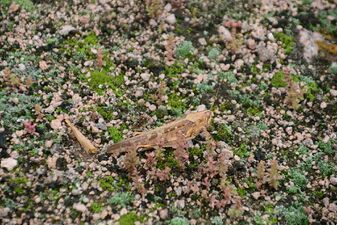
Grasshopper pests prevalent in the region include Tropidacris cristata dux (Drury 1773) in Central America, and Tropidacris collaris (Stoll 1813) in South America. T. cristata dux has inflicted substantial harm to crops in recent times, and it is recognized for its responsiveness to climate change.[9] Over the past two decades, the population density of T. collaris has consistently risen, leading to crop and tree damage in specific areas of north-central Argentina. Tucura sapo Bufonacris claraziana (Saussure 1884) frequently surges to pest levels within the steppes of Argentine Patagonia, resulting in significant harm to forage and grazing land.[3] Dichroplus maculipennis (Blanchard, 1851), a prominent pest species in the Pampas and Patagonia regions of Argentina and categorized as a non-model locust (Mariottini et al. 2015), along with Dichroplus elongatus Giglio-Tos, 1894, which is widely distributed across Chile, Uruguay, Southern Brazil, and Argentina, are recognized as two of the primary grasshopper pests in Argentina.[3] This is particularly notable in the Pampas and the fertile valleys of northwestern Patagonia. [10] [11]
Organizational relationships
Technical coordination takes place across various tiers: continental (such as GICSV), regional (involving OIRSA, COSAVE, Andean Community or CAN, and the North American Plant Protection Organization or NAPPO), and national levels. These entities convene to assess and recommend preventive and management measures in the event of a pest outbreak. The 2015-2021 outbreaks of locusts in Argentina, Bolivia, and Paraguay served to enhance collaboration among Argentina's domestic organizations and fostered chances for engagement with global entities like The Inter-American Institute for Cooperation on Agriculture (IICA), the Global Locust Initiative (GLI), and The French Agricultural Research Centre for International Development (CIRAD).
Within every Latin American nation, the National Service of Agriculture/Food Health and Quality holds responsibility for supervising, implementing, or aiding in the regulation and management of locusts and grasshoppers.[3] Generally, the orchestration of these endeavors is managed by regional organizations dedicated to phytosanitary protection. For example, the International Regional Organization of Plant and Animal Health (OIRSA) operates in Central America, while the Comité de Sanidad Vegetal del Cono Sur (COSAVE) functions in South America. In 2019, following the guidance of the International Plant Protection Convention, the Inter-American Coordinating Group in Plant Protection (GICSV) was established. This group comprises experts from diverse regional organizations and aims to assess the condition of various pests, including different species of locusts.
Research related to Acrididae are primarily carried out by national and state/provincial institutions, as well as universities, all of which emphasize the advancement of science, technology, and agriculture.[3] Historically, investigations into the systematics, biology, ecology, and biocontrol of pest grasshoppers in Argentina have primarily been conducted at CEPAVE and the National University of La Plata. However, the 2015-2021 outbreaks of S. cancellata spurred research collaboration between National Food Safety and Quality Service (SENASA), National Agricultural Technology Institute (INTA), the National Scientific and Technical Research Council (CONICET), and La Plata National University (UNLP). [5] [12]
See Mexico and Argentina for more details.
Regional management challenges
Regional cooperations
Effective and efficient management of locusts and grasshoppers demands stakeholder collaboration and regional cooperation. [3] When the flow of information is limited, countries and regions miss out on the chance to exchange expertise, experiences, viewpoints, tools, and infrastructure. Despite attempts to involve diverse organizations in the planning process, there remains significant potential for enhancement. An obstacle lies in constructing a thorough roadmap that outlines every action (research, development, innovation) and the responsibilities of each stakeholder. For instance, Argentina faces the absence of a strategic planning structure and should formulate a hierarchy of objectives spanning various timeframes, along with pinpointing accessible expertise and infrastructure. Embracing a theory of change (Oberlack et al 2019) should encompass a strategy for merging action protocols across different regions. The establishment of a cohesive set of criteria within a shared protocol would bolster coordination among nations. This protocol could serve as a navigational tool for transitioning from a reactive approach to a preventive one.
Data and forecasting
Developing forecasting models often hinges on large, comprehensive databases with abundant variables to capture insect-environment relationships.[3] However, such databases are rarely available in Latin America. Systematizing and centralizing data for S. cancellata is a recent initiative.
Investment in research
Inadequate research funding exists for the subsequent areas: biology, behavior, and ecology of locust/grasshopper pests; alternatives in managing acridids through biological means; impacts of climate change, including potential effects on locust populations' variability; creating early warning forecasting models, innovations in monitoring (such as remote sensing), and control measures (utilizing drones); determining environmental factors influencing reproduction and gregarization thresholds of S. cancellata for predictive mapping. [3]
Pesticide use
Latin America heavily relies on synthetic pesticides, posing substantial risks to the environment and human well-being, particularly for technicians.[3] This underscores the need for intensified endeavors to introduce microbial agents for biological control in certain regions and expand their utilization in others.
Training
In regions with extended periods of locust and grasshopper recession, organizational social capital and technician training tend to diminish (read more about the vicious cycle of locust outbreaks). There's a need to enhance training to bolster disaster prevention and risk reduction. Prolonged declines jeopardize the coordinated efforts of stakeholders. Establishing strong governance networks for intricate common-pool environmental challenges is a time and resource-intensive task. It's inefficient for individual personnel and organizations to start from scratch with each new outbreak. [3]
Intermediate regions in this subregion (3)
Caribbean, Central America, South America
Countries in this subregion (51)
Anguilla, Antigua and Barbuda, Argentina, Aruba, Bahamas, Barbados, Belize, Bolivia, Brazil, British Virgin Islands, Caribbean Netherlands, Cayman Islands, Chile, Clipperton Island, Colombia, Costa Rica, Cuba, Curaçao, Dominica, Dominican Republic, Ecuador, El Salvador, Falkland Islands, French Guiana, Grenada, Guadeloupe, Guatemala, Guyana, Haiti, Honduras, Jamaica, Martinique, Mexico, Montserrat, Nicaragua, Panama, Paraguay, Peru, Puerto Rico, Saint Barthélemy, Saint Kitts and Nevis, Saint Lucia, Saint Martin (French part), Saint Vincent and the Grenadines, Sint Maarten (Dutch part), Suriname, Trinidad and Tobago, Turks and Caicos Islands, United States Virgin Islands, Uruguay, Venezuela
Species gallery
- Highlighted species for Latin America and the Caribbean
-

-

-

-

-

-

-

-

-

-
-

-

-

-

-

-

Organizations
Locusts and grasshoppers are typically managed through a national plant protection system led by a country’s plant protection organization, ministry of agriculture, or equivalent biosecurity authority. They are often supported by specialized pest control branches, natural resource agencies, and regional bodies when outbreaks cross borders. These agencies are usually the first point of contact for surveillance, reporting, permits, quarantine decisions, and control operations. If the country belongs to one of the FAO locust commissions, those bodies provide a regional framework for early warning, field surveillance, information sharing, and coordinated response, helping countries align monitoring, contingency planning, and control actions across borders.
Resources
| Name | Species purview | Year published | Resource link | Descriptive keyword | Language | Geographic purview | Author |
|---|---|---|---|---|---|---|---|
| Acridomorph species of Argentina and Uruguay | Management, Biology, Species identification | English | Argentina, Uruguay | National University of La Plata | |||
| Action plan for managing the Central American locust | 2019 | View | Management, Biology, Species identification, Biopesticide, Robotics, Drones, Technology, Pesticide management, Survey | Spanish | Mexico, Guatemala, El Salvador, Honduras, Nicaragua, Costa Rica, Panama, Dominican Republic | International Regional Organization of Plant and Animal Health | |
| Alertas Senasa App | App, Emergency alerts | Spanish | Argentina | The National Food Safety and Quality Service | |||
| Control recommendations for locust and grasshoppers in Argentina | 2020 | View | Management, Training manual | Spanish | Argentina | Chamber of Agricultural Health and Fertilizers, The National Food Safety and Quality Service | |
| Crop prospects and food situation | 2020 | View | Outbreaks, Food security | English | Northern America, Latin America and the Caribbean | Food and Agriculture Organization of the United Nations | |
| FAO Plant Production and Protection Newsletter | View | Newsletter, Information hub | English | South America | FAO Plant Production and Protection Division, Food and Agriculture Organization of the United Nations | ||
| GICSV 2020 International Year of the Plant Health technical reports | 2021 | Biology, Distribution, Population dynamics, Set | English | Argentina, Paraguay, Uruguay, Chile, Bolivia, Brazil | Inter-American Coordinating Group in Plant Protection | ||
| Moruga Grasshopper (Coscineuta virens) Fact Sheet | 2020 | View | Species identification, Biology, Ecology | English | Trinidad and Tobago | Inter-American Coordinating Group in Plant Protection | |
| Operating manual for Central American locust control campaigns | 2019 | View | Management, Biology, Species identification | Spanish | Mexico | Servicio Nacional de Sanidad Inocuidad y Calidad Agroalimentaria | |
| Orthoptera of Maine | 1921 | View | Historical, Historical document, Identification, Ecology, Biology, Orthoptera, Fauna | English | Maine | United States Department of Agriculture | |
| Regional alert system for the South American locust | 2023 | Emergency alerts, Early warning | Spanish | Argentina | Comité de Sanidad Vegetal del Cono Sur, National Agricultural Technology Institute, Inter-American Institute for Cooperation on Agriculture | ||
| Seminario de Cooperación Regional Langosta Sudamericana: Estado de situación y cooperación | 2020 | View | Video, Regional cooperation, Outbreaks, Report | Spanish | Argentina, Bolivia, Uruguay, Brazil, Paraguay | The National Food Safety and Quality Service | |
| SENASA locust bulletin | Emergency alerts | Spanish | Argentina | The National Food Safety and Quality Service | |||
| Situation and recommendations for controlling the Central American locust in the countries of the OIRSA region | 2020 | View | Management, Geographical differences, Situation bulletin | Spanish | Mexico, Belize, Guatemala, El Salvador | International Regional Organization of Plant and Animal Health | |
| Situation of locust and grasshopper plagues in South America December 2022 | 2022 | View | Spanish | Argentina, Bolivia, Brazil, Chile, Paraguay, Peru, Uruguay | Comité de Sanidad Vegetal del Cono Sur, The National Food Safety and Quality Service, Servicio Nacional de Sanidad Agropecuaria e Inocuidad Alimentaria, National Plant and Seed Health and Quality Service, Servivio Nacional de Sanidad Agraria, National Ministry of Agriculture, Livestock and Fishery | ||
| South American Acridia management dashboard | 2023 | View | Management, Communication resource | Spanish | Argentina, Paraguay, Uruguay, Bolivia | The National Food Safety and Quality Service | |
| South American locust control manual | 2018 | View | Management, Training manual | Spanish | Argentina | The National Food Safety and Quality Service | |
| South American locust NSF Grant for Rapid Response Research project summary | 2021 | Summary, Set, Project, Project report | English, Spanish, French | Argentina, Uruguay, Paraguay, Bolivia, United States | The National Food Safety and Quality Service, Servicio Nacional de Sanidad Agropecuaria e Inocuidad Alimentaria, National Plant and Seed Health and Quality Service, Global Locust Initiative, Universidad Autónoma Gabriel René Moreno, Arizona State University | ||
| South American locust WhatsApp Alert Channel | 2023 | Communication resource, Artificial intelligence, Emergency alerts | Spanish | Argentina | The National Food Safety and Quality Service | ||
| Synthesis of the governance workshop on the South American Locust | 2021 | Workshop, Summary, Governance, Set, Meeting, Project report | English, Spanish | Argentina, Bolivia, Paraguay, Uruguay, United States | Foundation for Food & Agriculture Research, The National Food Safety and Quality Service, Global Locust Initiative, Clara Therville, John Anderies, Hector Medina, Rick Overson, Eduardo Trumper, Arianne Cease | ||
| Technical paper on the Central American locust | 2016 | View | Species identification, Education | Spanish | Mexico | Servicio Nacional de Sanidad Inocuidad y Calidad Agroalimentaria | |
| The Moruga locust | View | Species identification, Biology, Ecology | English | Trinidad and Tobago | The Ministry of Agriculture, Land and Fisheries of Trinidad and Tobago | ||
| Trinidad and Tobago Giant Grasshopper Species Profile | 2015 | View | Biology | English | Trinidad and Tobago | ||
| USAID Transboundary Outbreak Pest ETOP bulletins | Information hub, Series | English | Sub-Saharan Africa, Latin America and the Caribbean | United States Agency for International Development | |||
| West Indian Mole Cricket Species Profile | 2016 | View | Biology | English | Trinidad and Tobago |
Highlighted media coverage
Projects
References
- ↑ 1.0 1.1 Medina H, Cease A, Trumper E (2017) The resurgence of the South American locust (Schistocerca cancellata). Metaleptea Volume 37:17–21. https://www.researchgate.net/publication/319987703
- ↑ Poot-Pech MA (2017) Meeting on the locust situation in South America and the OIRSA region. Metaleptea 37: 2–4.
- ↑ 3.00 3.01 3.02 3.03 3.04 3.05 3.06 3.07 3.08 3.09 Ries MW, Adriaansen C, Aldobai S, Berry K, Bal AB, Catenaccio MC, Cigliano MM, Cullen DA, Deveson T, Diongue A, Foquet B, Hadrich J, Hunter D, Johnson DL, Pablo Karnatz J, Lange CE, Lawton D, Lazar M, Latchininsky AV, Lecoq M, Le Gall M, Lockwood J, Manneh B, Overson R, Peterson BF, Piou C, Poot-Pech MA, Robinson BE, Rogers SM, Song H, Springate S, Therville C, Trumper E, Waters C, Woller DA, Youngblood JP, Zhang L, Cease A (2024) Global perspectives and transdisciplinary opportunities for locust and grasshopper pest management and research. Journal of Orthoptera Research 33(2): 169–216. doi:10.3897/jor.33.112803.
- ↑ De Wysiecki ML, Lange CE (2005) La langosta Schistocerca cancellata Serville (Orthoptera: Acrididae) en Argentina: biología, ecología, historia y control. In: Barrientos Lozano, L. and P. Almaguer Sierra (Eds.), Manejo Integrado de la Langosta Centroamericana (Schistocerca piceifrons piceifrons Walker) y acridodeos plaga en América Latina. Instituto Tecnológico de Ciudad Victoria, Tamaulipas, México: 151-156. ISBN: 970-18-7628-8.
- ↑ 5.0 5.1 Pocco M E, Cigliano MM, Foquet B, Lange CE, Nieves EL, Song H (2019) Density-Dependent Phenotypic Plasticity in the South American locust, Schistocerca cancellata (Orthoptera: Acrididae). Annals of the Entomological Society of America 112: 458–472. https://doi.org/10.1093/aesa/saz032
- ↑ Morales RS (2005) Langosta plaga en el Perú (Schistocerca piceifrons peruviana; S. interrita). Manejo y control. In: Barrientos-Lozano L. and Almaguer-Sierra P. (eds.). Manejo Integrado de la Langosta Centroamericana (Schistocerca piceifrons piceifrons Walker) y Acridoideos Plaga en América Latina. Instituto Tecnológico de Cd. Victoria, Cd. Victoria, Tamaulipas, México. 180–198.
- ↑ Duranton JF, Monard A, Morales RS (2006) Contribution à l'étude de la bioécologie de deux locustes péruviens, Schistocerca cf. interrita Scudder 1899 et Schistocerca piceifrons peruviana2 Lynch Arribalzaga 1903 (Orthoptera, Cyrtacanthacridinae). Journal of Orthoptera Research 15: 157–169.
- ↑ Lecoq M, Pierozzi Jr. I (1995) Rhammatocerus schistocercoides locust outbreaks in Mato Grosso (Brazil): a long-standing phenomenon. The International Journal of Sustainable Development and World Ecology 2: 45–53. https://doi.org/10.1080/13504509509469888
- ↑ Poot-Pech MA (2019) The effect of increasing temperatures on outbreaks of Tropidacris spp in the Americas. Metaleptea. Abstract book. 13th International Congress of Orthopterology. Agadir. Morocco.
- ↑ Cigliano MM, Pocco M, Lange CE (2014) Acridoideos (Orthoptera) de importancia agroeconómica en la República Argentina. In: Roig Juñent et al. (Eds.). Biodiversidad de Artrópodos Argentinos vol. 3. Editorial INSUE - UNT, San Miguel de Tucumán, Argentina: 11–36.
- ↑ Carbonell CS, Cigliano MM, Lange, CE (2022). Acridomorph (Orthoptera) species of Argentina and Uruguay. 2nd. Ed. Publications on Orthopteran Diversity. The Orthopterists’ Society. https://biodar.unlp.edu.ar/acridomorph/
- ↑ Trumper EV, Cease AJ, Cigliano MM, Bazán FC, Lange CE, Medina HE, Overson RP, Therville C, Pocco ME, Piou C, Zagaglia G, Hunter D (2022) A Review of the Biology, Ecology, and Management of the South American Locust, Schistocerca cancellata (Serville, 1838), and Future Prospects. Agronomy 12: 135. https://doi.org/10.3390/agronomy12010135